Sick of choosing dinner alone? How food apps quietly changed our family meals
We’ve all been there—exhausted after work, staring at our phones, deciding what to eat again. It’s not just about hunger; it’s about connection, routine, family. I used to dread mealtime, but then I noticed something small yet powerful: how food delivery apps began shaping not just what we ate, but how we ate together. They didn’t replace cooking—they gave us breathing room, choices, and even joy. Let me show you how this everyday tech became an unexpected ally in our home.
The Evening Dilemma: When “What’s for Dinner?” Feels Like a Battle
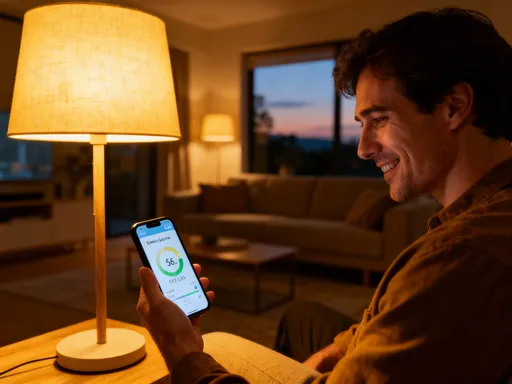
It starts around 5:30 PM. The kids are dragging their backpacks across the floor, the dog needs walking, and someone forgot to take the chicken out of the freezer. My phone buzzes with a text from my husband: 'Any idea what’s for dinner?' And just like that, the weight settles on my shoulders. I’m not just feeding mouths—I’m managing moods, allergies, picky eaters, and my own fading energy. For years, I carried the invisible load of deciding what to cook, every single night. It wasn’t just tiring—it felt lonely.
I’d scroll through recipes, check the fridge, wonder if I had time to defrost something, and then face the real challenge: getting everyone on the same page. My daughter wanted pasta. My son demanded tacos. My husband said he was 'fine with anything'—which somehow meant he’d complain later. That simple question, 'What’s for dinner?' became a landmine of unspoken expectations. I wasn’t just making a meal—I was trying to please everyone while feeling completely unseen.
And I know I’m not alone. So many of us—especially women—absorb this mental labor without realizing how heavy it is. It’s not just about cooking. It’s about remembering who likes what, who’s allergic to which sauce, who’s been craving sushi for three days. It’s the constant negotiation between health, budget, time, and desire. By the time dinner hit the table, I was already drained. The meal itself, meant to be a moment of togetherness, often felt like the end of a long, quiet battle I’d fought alone.
Then one rainy Thursday, I didn’t fight it. I opened a food app, tapped a few buttons, and said, 'We’re ordering tonight.' No guilt. No debate. And for the first time in months, I sat down with my family without feeling like I’d already run a marathon. That small act didn’t just change dinner—it changed how we related to each other around it.
How Food Apps Became Our Dinner Team
At first, I thought of food apps as something I used when I was too tired to cook—like a last resort. But slowly, I began to see them differently. They weren’t just tools for delivery; they became part of our family rhythm. Instead of shouldering the entire decision myself, I started sharing restaurant links in our group chat. 'Look at this new Thai place—want to try it?' I’d send. Or, 'I found a gluten-free pizza spot—thought of you, Mom.'
Something shifted when I stopped being the sole decision-maker. My kids started chiming in with their own finds. My daughter saved a vegan burger joint to her favorites and asked if we could try it for 'Meatless Monday.' My son discovered a Korean BBQ spot and sent a screenshot: 'This looks fire. Can we do this Friday?' Even my mom, who lives two hours away, started commenting on our meal choices when we sent her photos. 'That soup looks just like what my aunt used to make,' she once said, and suddenly, dinner became a bridge to memory.
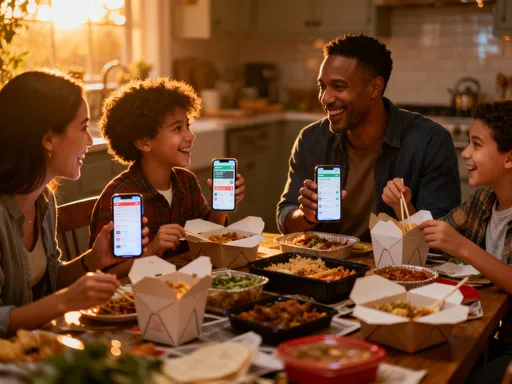
The app became our shared space—a place where everyone could contribute, not just consume. We created a family list of 'Top 10 Favorites' and rotated through them on busy nights. We even started a tradition: every Sunday, we’d all open the app, pick a new place we hadn’t tried, and vote. It sounds small, but it wasn’t just about food. It was about inclusion. It was about saying, 'Your taste matters. Your voice counts.'
And honestly? The meals tasted better when everyone had a hand in choosing them. There was less complaining, more excitement. Instead of 'I don’t like this,' I started hearing, 'I picked this! Try the dumplings!' The app didn’t replace family meals—it redefined them. We weren’t just eating together. We were deciding together.
The Hidden Power of “Everyone Pick One”
One night, I tried something different. I said, 'Okay, everyone gets to pick one meal for the week. You choose what you want, and I’ll make sure it happens.' I expected chaos. What I got was connection. My daughter chose a Mediterranean bowl place she’d seen on a friend’s Instagram. My son went for a burger spot with sweet potato fries. My husband picked a Mexican place with those giant burritos he loves. And I treated myself to a cozy ramen shop I’d been eyeing.
What surprised me wasn’t just that they were excited—but how much more present they were during those meals. When it was my son’s pick, he proudly explained the menu to us. 'They make their own salsa,' he said, like he was hosting a dinner party. When it was my daughter’s turn, she made sure we all tried the falafel, even my skeptical husband. And when my ramen night came, they asked me questions about the broth, the noodles, the little soft-boiled egg on top. It felt like we were rediscovering each other, one meal at a time.
Letting each person choose—even within limits—gave them a sense of control in a world where so much feels out of their hands. My daughter, who used to shut down during family decisions, started speaking up. 'Can I pick next week too?' she asked. My son, who often seemed disconnected, began planning ahead: 'Can we save my pick for after my baseball tournament?' It wasn’t just about food. It was about respect. It was about saying, 'You matter. Your preferences aren’t an inconvenience—they’re part of what makes us us.'
I started calling it our 'choice ritual.' It took five minutes on Sunday nights, but the ripple effect lasted all week. There was less resistance, more gratitude. And when someone’s pick didn’t land perfectly? We laughed. 'Okay, that curry was a little spicy,' I admitted. 'But I loved that you wanted to share it with us.' The app made it easy to rotate, to experiment, to forgive. And in that freedom, we found something deeper: a shared rhythm, built not on perfection, but on participation.
Saving Time, Not Just Meals
Time is the currency of modern life. And for families, it’s always in short supply. Before we started using food apps more intentionally, I’d spend hours every week planning meals, making lists, grocery shopping, and then—on top of it all—cooking. I thought I was being responsible. What I didn’t realize was that I was trading my energy for a myth: the idea that homemade meals were always better, always worth it.
But then I started tracking what really happened. On nights I cooked, I was often too tired to engage. I’d stir a pot while answering work emails, half-listening to my kids’ stories. The meal would get eaten quickly, cleanup would fall to me, and by 8 PM, I’d collapse on the couch, wondering where the evening went. Meanwhile, on delivery nights, something changed. Because I wasn’t cooking, I was present. I sat at the table. I asked questions. I actually heard the answers.
The app made this shift possible. I saved our favorite orders, so reordering took seconds. I scheduled deliveries for 6:15 PM, so dinner arrived warm and ready while we finished homework or walked the dog. I used dietary filters to find nut-free, dairy-free, or low-sodium options—no more double-checking menus or calling restaurants. It wasn’t about avoiding effort. It was about redirecting it.
And the time we saved? We didn’t just gain minutes—we gained moments. We read together. We played board games. We talked about school, dreams, fears, funny things that happened at work. One night, my daughter said, 'I like these delivery nights. You’re not in the kitchen the whole time.' That hit me hard. She wasn’t just noticing the food. She was noticing me.
The app didn’t eliminate cooking—it balanced it. Now, we cook when we want to, not because we have to. We make my grandmother’s lasagna on Sundays. We bake cookies together in the winter. But on hectic weeknights? We don’t feel guilty about pressing a button. Because we’ve learned: the most important ingredient isn’t in the meal. It’s in the space it creates.
Bridging Generations Through Taste
Food carries memory. It holds stories. And sometimes, it’s the easiest way to say, 'I love you' when words feel hard. My mother grew up in a small town where the diner served the same chicken soup every day. When she visits, she always asks if we can find something 'like that old soup.' For years, I tried to recreate it. Then I found a local comfort food spot that made a version so close, she teared up the first time she tasted it.
I sent her the app link. 'Save it,' I said. 'Next time you’re here, you can order it yourself.' And she did. Not just once—every visit. Now, when she comes, she pulls out her phone and says, 'Let’s get my soup.' It’s become our ritual. And when my kids see her stir the broth with a quiet smile, they’re not just watching her eat. They’re watching her remember.
But it goes both ways. My kids are curious about flavors I never tried at their age. My daughter loves Ethiopian food. My son is obsessed with Japanese ramen. At first, I worried—would it be too expensive? Too unfamiliar? Then I realized: the app made it safe to explore. We could try a new cuisine without committing to a full restaurant trip. We could order one dish, share it, and decide if we wanted more.
One night, we ordered a Korean bibimbap for the first time. I showed them how to mix the egg, the rice, the spicy gochujang. 'This is how my friend’s mom makes it,' my daughter said. And suddenly, our table wasn’t just a place to eat. It was a classroom. A passport. A way to say, 'The world is big, but we can taste it together.'
These meals didn’t just feed us. They connected us—to each other, to cultures, to generations. The app didn’t create these moments. But it made them possible. It lowered the barrier to trying something new, to honoring an old favorite, to saying, 'This matters to me, so I want to share it with you.'
When the App Knows You Better Than You Do
There’s a moment, usually on a rough day, when the app surprises me. I open it after a long meeting, feeling too drained to decide, and there it is: a little notification. 'Try this? You liked the mushroom risotto last time.' Or, 'Your usual order is ready to reheat in 10 minutes.' And something in me relaxes. It’s not magic. It’s algorithms. But in that moment, it feels like care.
I know not everyone feels this way. Some see personalization as creepy. I get it. But for me, it’s become a form of quiet support. On nights when I’m overwhelmed, the app suggests the Thai curry my family loves. When my daughter has a late practice, it reminds me to schedule delivery for 7 PM. When my husband travels, it highlights solo portions—small things, but they add up.
And yes, I think about privacy. I don’t share everything. But within boundaries, I’ve learned to let the app help. It remembers my go-to substitutions: 'no onions, extra pickles.' It knows my son prefers his burgers well done. It even learns our rhythm—busier on school nights, quieter on weekends. It’s not replacing human connection. It’s making space for it.
One rainy night, my daughter was sick. I didn’t have the energy to cook. I opened the app, and it suggested the chicken noodle soup from the comfort food spot. I clicked 'reorder.' Twenty minutes later, it arrived. She sat up in bed, wrapped in a blanket, and said, 'You remembered.' I didn’t. The app did. And in that moment, it didn’t matter who remembered. What mattered was that she felt seen.
That’s the quiet power of this technology—not in the delivery, but in the details. It doesn’t feel like a machine. It feels like a helper who’s been paying attention. And sometimes, that’s exactly what we need.
Rethinking Convenience: It’s Not Laziness—It’s Strategy
We’ve been taught to feel guilty about convenience. That taking the 'easy way' means we’re not trying hard enough. That using an app to order dinner is giving up. But after years of carrying the full weight of family meals, I’ve come to see it differently. Using a food app isn’t surrender. It’s strategy. It’s choosing where to spend my energy—and where to save it.
Because here’s what no one tells you: when you stop spending all your mental space on dinner, you have room for other things. I started reading again. I took an online course. I actually finished a puzzle with my kids without rushing to clean up afterward. My marriage felt lighter. My kids seemed more open. I wasn’t just feeding them. I was showing up for them.
And let’s be honest—sometimes, peace is more important than a homemade meal. There are nights when the best thing I can do for my family isn’t cooking from scratch. It’s staying calm. It’s listening. It’s not snapping when someone spills milk. The app gives me that gift: the gift of presence.
It’s not about replacing tradition. It’s about redefining it. Our family meals still matter—maybe more than ever. But now, they’re not built on my exhaustion. They’re built on choice, connection, and the quiet understanding that love doesn’t have to be earned through sacrifice.
So yes, I use a food app. I let my kids pick. I save favorites. I schedule deliveries. And I don’t apologize for it. Because in the end, it’s not about the food. It’s about the life we’re building around the table. And that? That’s worth every tap, every order, every shared meal—no matter where it came from.